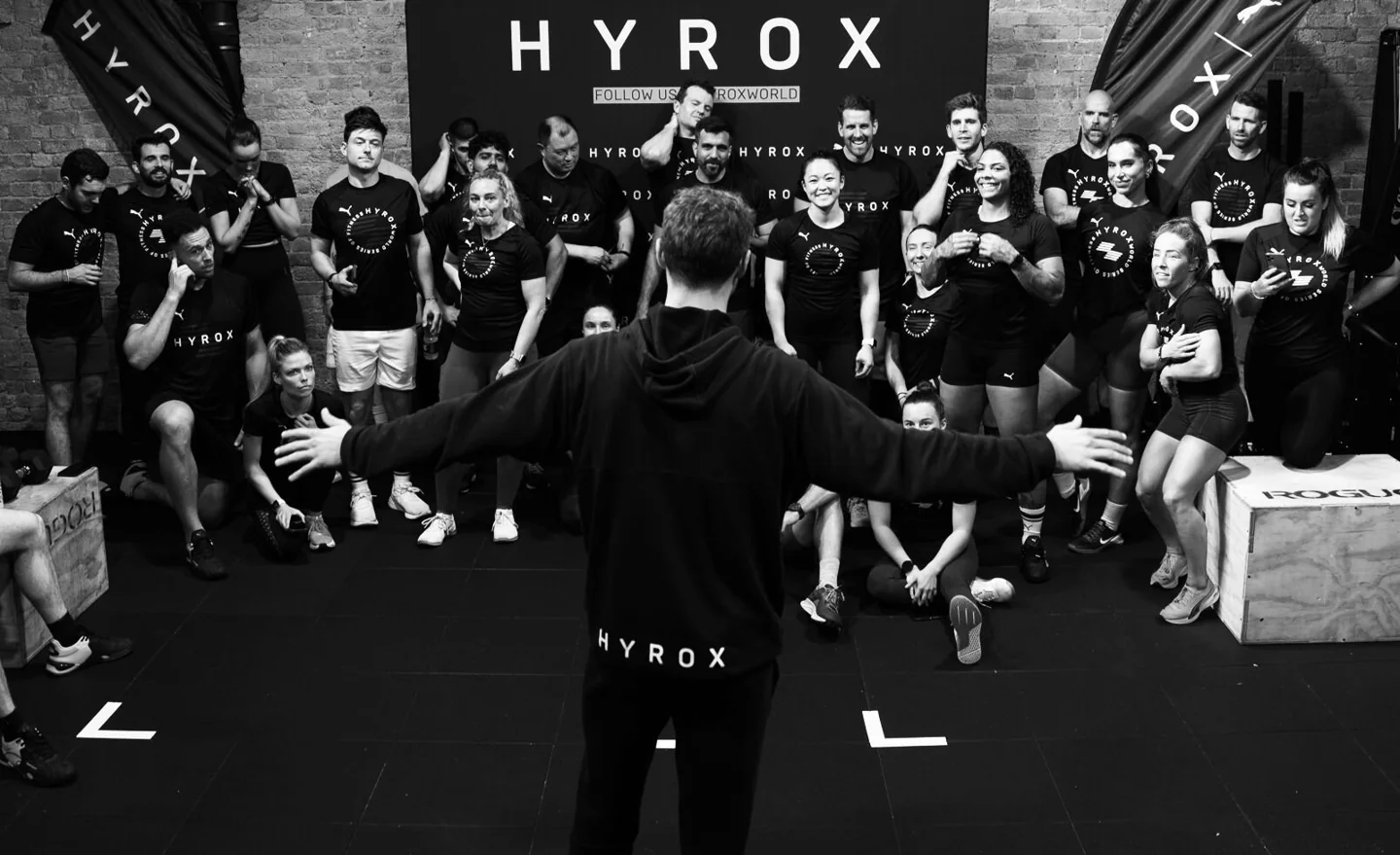
Image: HYROX Sports Science Report 2025
For the first time, HYROX has put real science behind the sport. The HYROX Science Advisory Council brought together physiologists, biomechanists, and data scientists from universities around the world, and published the findings as the inaugural HYROX Sports Science Report 2025.
With a forecast of 1.3 to 1.5 million participants across the 2025 to 2026 season, the academic world is finally catching up to what coaches have felt for years. The report pulls together peer-reviewed studies, original research, and interviews with the people doing the work. Below is what stood out to me, and how I would use it on the gym floor.
Read The Full HYROX Science Report (PDF)
Running is the race.
The first scientific study of a simulated HYROX, run by Tom Brandt's team at the University of the Bundeswehr in Munich, tracked recreational athletes through a full Individual Open race. Of a median completion time of 86.2 minutes, running accounted for 51.2 minutes. The eight workout stations together took just 32.8 minutes.
A separate data study, which scraped more than 14,000 Male Open performances across 15 races, backed this up. The mid-race running segments, runs five through eight, had the strongest correlation with total race time. If your members want a faster HYROX, the running is the lever. Endurance is not the boring bit you do between stations. It is the sport.
It is a high-intensity sport, not a steady grind.
In the Munich study, 70.5 percent of the race was performed at a heart rate considered hard or very hard, sitting between 70 and 100 percent of max. Faster finish times correlated directly with a higher VO2 max and a lower body-fat percentage. The takeaway for programming is simple. Members need real exposure to high intensity in training, not just long easy volume, if they want to hold pace on race day.
The wall balls are where races are won and lost.
Every athlete in the Munich study showed a huge spike in heart rate, blood lactate, and perceived effort on the wall balls. The data study found wall balls had the highest variability of any station, with a standard deviation of two minutes. Burpee broad jumps and sandbag lunges were close behind. These stations come late, they are technical, and fatigue hits hardest exactly where technique matters most.
That makes them the key splits. They are the hardest to master and the most impactful, which is precisely why they are worth dedicated coaching time. The SkiErg and the row, by contrast, were the most consistent across athletes. Spend your coaching minutes where the time is actually leaking.
Do not fear the sleds.

Here is the counter-intuitive one. The heaviest stations, the sled push and sled pull, were completed quickest of all, averaging 128 and 155 seconds. Heart rate and perceived effort actually dropped during them. The practical read is that the easier-feeling work tends to arrive early, and building speed as you progress deeper into the race is a valid strategy rather than blowing up in the first half.
Hybrid training builds everything at once.
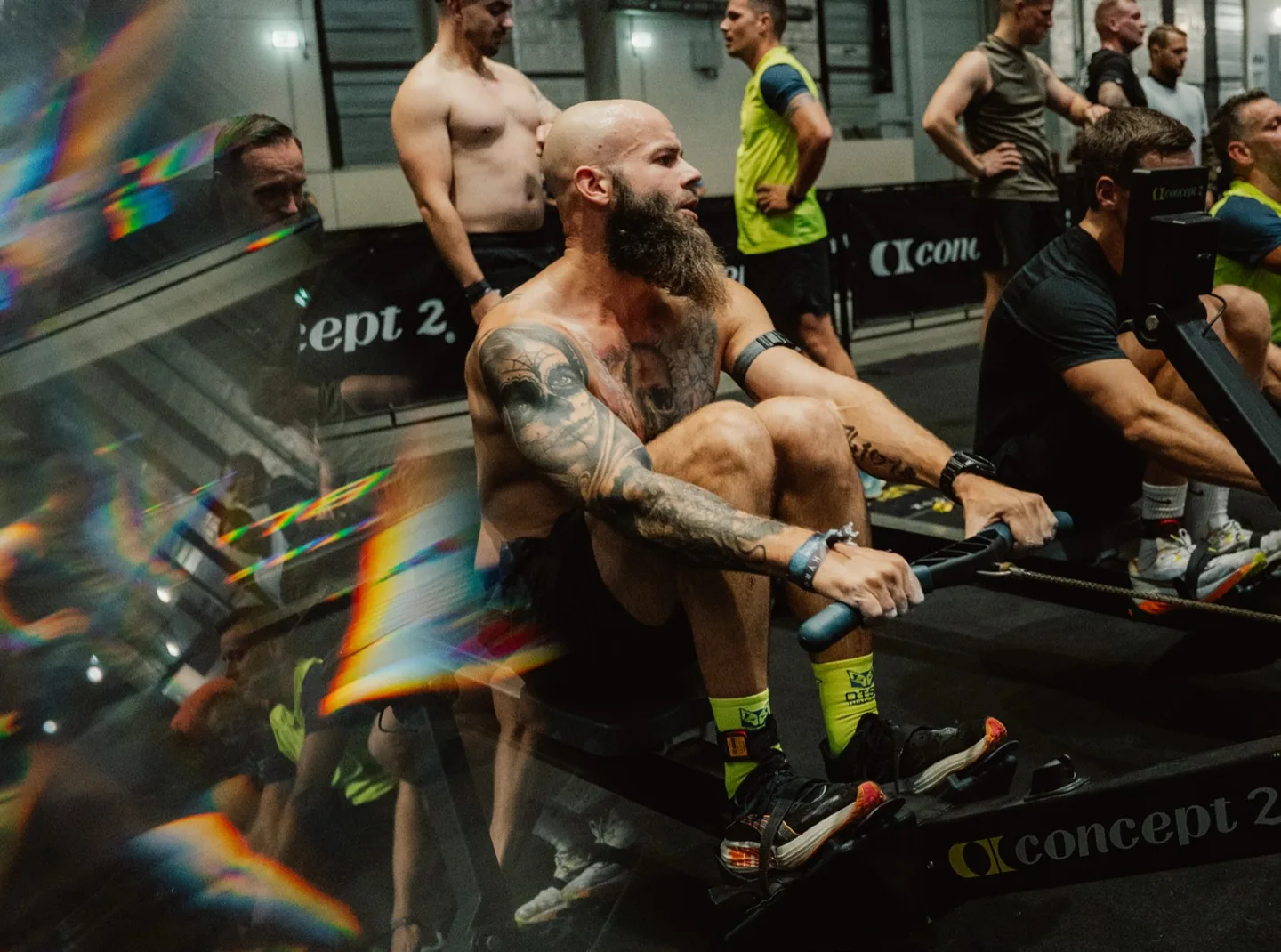
Two reviews carried the same message. A meta-analysis from Liverpool John Moores University and a scoping review of 39 studies from universities in Zaragoza and León both found that training across running and strength at the same time, known as concurrent training, improves endurance and strength together rather than one blunting the other. In controlled trials, this kind of training improved VO2 max by 8 to 15 percent and maximal strength by 10 to 20 percent.
For a gym owner this is a gift. Concurrent training improved cardiovascular health across every age group, with middle-aged and older adults seeing the strongest results. HYROX is not just a young athlete's game. It is one of the cleanest health and longevity stories you can sell to a member in their forties, fifties, and beyond.
Give it at least six weeks.
The research is consistent that a structured, goal-oriented block of no less than six weeks is where the real adaptation shows up, and that endurance should be prioritised ahead of strength inside that block. This is a useful anchor for how you sell and structure programmes. A clear runway with a race or testing day at the end gives members a reason to commit, and the science says that commitment is exactly what changes their fitness.
Time itself is a training lever.
A study from the Federal University of Rio de Janeiro, published in Frontiers in Physiology, kept total workload identical and only changed how long the session lasted. Short sessions under eight minutes produced the highest heart rate and lactate, building anaerobic power. Moderate sessions around 15 minutes produced the greatest oxygen uptake. Longer sessions of 25 to 30 minutes drove sustained endurance. Same work, different adaptation. For coaches, the clock is a dial you can turn on purpose.
Coach the athlete in front of you.
The data study clustered athletes into three types. Runners spend less time than average on the runs. Powerhouses move quickly through the stations but give time back on the running. Hybrids sit in the middle. Knowing which one a member is tells you instantly whether to protect a strength or attack a weakness. It turns a generic plan into a personal one.
The female athlete finally gets the science.

HYROX has a roughly 50-50 male to female split, which is rare in competitive sport. Yet, as Dr. Samantha Rowland of Loughborough University points out in the report, most exercise science has historically been built on young male university students. Women's physiology is shaped by hormones, the menstrual cycle, contraception, pregnancy, and menopause, all of which affect training, recovery, and adaptation. If half your community is female, this is a reason to coach women as women, not as smaller men, and the research base to support it is finally being built.
What I would do with this as an operator.
- Make running the spine of your HYROX programming, not an afterthought.
- Build dedicated technique time into wall balls, burpee broad jumps, and lunges, because that is where time leaks.
- Sell six-week blocks with a clear testing day or race at the end.
- Use the longevity angle to bring in older members, the science is firmly on your side.
- Vary session length on purpose to target power, capacity, or endurance.
- Coach to athlete type, and give your women's training the attention the field now demands.
This is the inaugural report, which means the science of HYROX is only going to get deeper from here. Reading it in full is worth the time for any coach or owner who wants to lead with evidence rather than opinion.
Read The Full HYROX Science Report (PDF)
The HYROX Sports Science Report 2025 is published by the HYROX Science Advisory Council and the HYROX 365 Academy. This article is The Hybrid Group's independent breakdown of that research for coaches, athletes, and gym owners.